Does Homeowners Insurance Cover Mold Remediation in Idaho?
Sometimes — and the cause decides, not the mold. A burst pipe or a water heater that fails without warning usually means the mold that follows is covered, up to a separate mold limit. A slow leak, humidity, or floodwater usually means it is not. Here is how to read your policy, what Idaho adds to the picture, and what to do in the first hours after you find mold.
- The cause decides the claim, not the mold
- Covered mold pays up to a sublimit — usually $1,000 to $10,000
- Idaho specifics: the Department of Insurance, Idaho Code 41-1839, and the Melichar renewal case
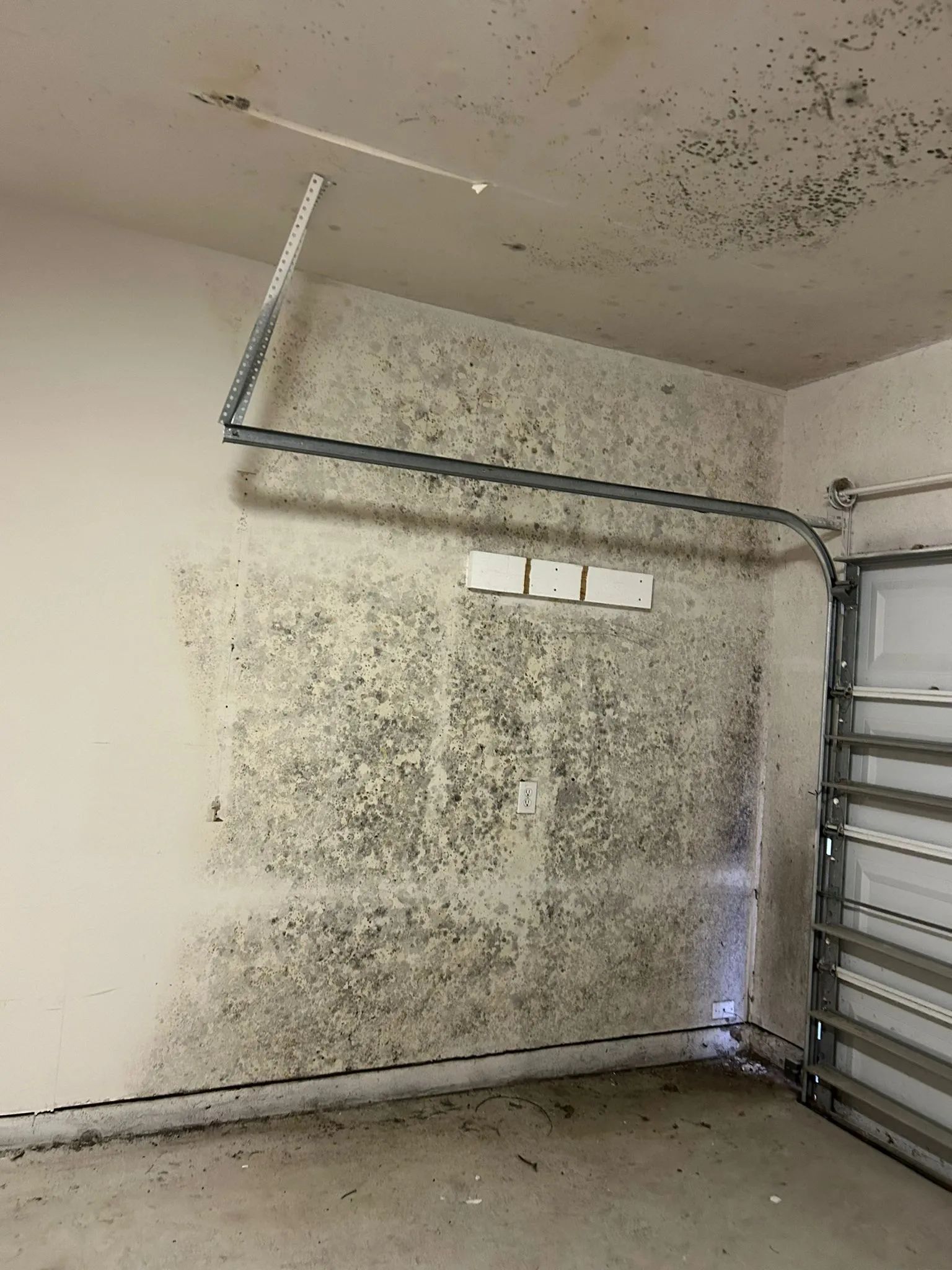
The short answer
Sometimes — and the cause decides, not the mold. If a sudden, covered event caused the water that grew the mold — a burst pipe, a water heater that failed without warning, an accidental overflow — a standard homeowners policy usually covers the remediation as part of the water-damage claim, up to a separate mold limit that is much smaller than your dwelling limit.
If the mold grew from a slow leak, humidity, poor maintenance, or floodwater, the standard policy usually pays nothing at all. And even when it does pay, it pays for the mold cleanup and the repairs to what had to come out — not for fixing the pipe or appliance that failed.
Your policy's exact words decide your claim, not this guide and not any other website. What follows is how to read those words, what Idaho adds to the picture, and what to do in the first hours after you find mold so a covered claim stays covered.
Not sure whether your mold follows a covered event? Call (321) 985-3339 and tell us what got wet, when it happened, and where the mold is. We will tell you honestly whether it sounds like an insurance job or one you will be paying for yourself.
Not sure whether your mold follows a covered event? Tell us what got wet, when it happened, and where the mold is, and we will tell you honestly whether it sounds like an insurance job or one you will be paying for yourself.
The one rule: the cause decides, not the mold
Homeowners insurance does not insure mold. It insures sudden events — the industry calls them covered perils — and mold is only covered when it follows one of those events. The Insurance Information Institute puts it plainly: mold that results from a covered peril is usually protected under a standard policy, and mold that results from neglect is not.
A standard HO-3 policy, the form most Idaho homeowners carry, names accidental discharge or overflow of water from plumbing, heating, air conditioning, fire sprinklers, and household appliances as a covered peril. When one of those systems fails without warning and water escapes, any mold that develops as a direct result is generally treated as part of the same covered loss. Insurers call this an ensuing loss: the mold is the consequence of the covered event, so it rides on the same claim.
There is also a carve-back worth knowing. The standard form excludes mold in general, but it carves mold back in when it is hidden within walls, ceilings, or floors and was caused by an accidental discharge from plumbing, heating, air conditioning, or an appliance. That is the most common covered mold scenario in a Boise home: a supply line cracks behind drywall, nobody sees it for days, and mold grows inside the wall cavity.
Speed matters twice over. Mold can begin growing on a damp surface within 24 to 48 hours of water exposure, which is the EPA's own window for drying water-damaged areas. And the Insurance Information Institute notes that mold present for several weeks or longer likely will not be covered — by then it reads as neglect, not as a sudden loss. A leak you found the day it happened and a leak you found a month after it started are two different claims, even if the pipe is the same one.
What caused it: the table that decides your claim
| What caused the mold | Usually covered? | Why |
|---|---|---|
| Burst or frozen pipe | Yes | Sudden and accidental, a named peril on most policies |
| Water heater or appliance that failed suddenly | Yes | Sudden discharge counts; the broken appliance itself is not covered |
| Accidental toilet or bathtub overflow | Yes | Unexpected overflow; deliberate overflow or neglect may void it |
| Storm damage that lets water in (roof, window) | Yes, if sudden | A storm-created opening is a covered event |
| Slow drip from a pipe over weeks or months | No | Gradual seepage is excluded as maintenance, not a sudden loss |
| Humidity, condensation, poor ventilation | No | Moisture the homeowner controls is not a covered peril |
| Floodwater, Boise River high water, foothills gulch flash flood | No | Flooding is excluded from standard homeowners policies entirely |
| Sewer or drain backup | No, under a standard policy | Excluded unless you bought a separate backup endorsement |
| Mold that was already there when you bought the house | No | Pre-existing damage is not a new loss |
Some policies draw the line at 14 days of continuous seepage: the form excludes damage from continuous or repeated seepage or leakage over a period of weeks, and many insurers use 14 days as the threshold between a sudden leak and excluded gradual damage. If your plumber can date the failure to a specific day, that date is the most valuable fact in your claim.
The sublimit: what insurance actually pays
Even when mold is covered, it is not covered up to your dwelling limit. Most standard policies carry a separate mold sublimit — a smaller cap that applies only to mold-related testing, cleanup, and repair. Common sublimits run from $1,000 to $10,000 per claim, with many policies defaulting to $5,000. Your $300,000 dwelling limit does not matter here; the mold cap is its own number, and it is written in your policy's endorsements section.
Three things about the money that surprise people:
- Your deductible comes off the top. A $5,000 mold limit with a $1,000 deductible means $4,000 at most from the insurer, not $5,000. Some policies also apply a separate mold deductible on top of the regular one — ask your insurer directly whether yours does.
- It does not pay to fix the cause. The policy pays to remove the mold and repair what had to be torn out. It does not pay to replace the burst pipe or the failed water heater. That part is yours, whatever the claim outcome.
- You can raise the cap, but only before a loss. A mold endorsement, sometimes called a rider — ISO form HO 04 26 is the common one — can raise mold coverage to $25,000 or more for an added premium. It has to be on the policy before the water shows up. After the mold is already there, no endorsement will cover it.
Do the math against our own mold remediation cost guide: a typical Boise job runs $1,200 to $3,750, using published national ranges. On a $5,000 sublimit, a covered job is usually paid in full apart from your deductible. On a $1,000 cap, most of a normal job still lands on you even when the claim is approved. The sublimit, not the yes-or-no coverage question, is what decides your out-of-pocket number — which is why the first thing to check is not whether mold is covered, but how much mold coverage you actually bought.
What insurance never covers
Four exclusions show up in almost every denied mold claim in Idaho, and the table above already names them — here is the detail that catches people out. A slow drip, a shower leaking into a wall for a season, a window that lets water in every winter: the form calls this wear and tear, and no policy pays for maintenance. Damp basements and poor ventilation are the same story — moisture the homeowner controls. Floodwater is excluded from standard policies entirely, and even the National Flood Insurance Program does not cover damage from mold, according to FEMA — so mold that followed floodwater is denied on the flood exclusion alone, and the flood policy will not pick up the mold either. Water backing up through sewers, drains, or sump pumps is excluded under the same water-damage exclusion unless you bought a backup endorsement. And pre-existing mold is not a new loss, which is why the seller disclosure section below matters to buyers.
Idaho specifics: what is different here
Most mold coverage rules are national — the HO-3 form is the same form everywhere. Three things are specifically Idaho, and they change what to do after a denial or a dispute.
The Idaho Department of Insurance tells you the order of operations. Its Home and Renters Claims guidance (Idaho Department of Insurance, Home and Renters Claims) says: take photos or video to record the damage, and if possible do it before any mitigation work starts. Do not throw anything out until your claims adjuster tells you to — adjusters like to inspect damaged items themselves. Mitigate the damage so it does not spread, because your policy usually requires that. And prepare a detailed list of lost or damaged items, with brand, model, serial number, and measurements where you have them. The Department itself cannot adjust your claim or decide what it is worth, but it takes calls from homeowners having trouble with a claim — 334-4250 in the Boise area, 800-721-3272 toll-free statewide.
Idaho law gives a denied claim a second lever. Under Idaho Code 41-1839, if an insurer fails to pay the amount justly due within 30 days after proof of loss is furnished, and you have to sue or go to arbitration, the court can award you reasonable attorney's fees. That does not make a bad claim good, but it means a valid claim that an insurer is slow-walking has a remedy beyond the claim itself.
An Idaho court has already ruled on the renewal trap. In Melichar v. State Farm, decided by the Idaho Supreme Court in 2007, a homeowner had two water losses months apart. The first policy covered the mold remediation from the first loss. The renewal policy, in force for the second loss, contained a mold exclusion endorsement — and the court held the second loss fell under the renewal policy, so the mold from the second loss was not covered. The lesson is practical, not legal: a renewal can quietly add a mold exclusion that was not in last year's policy. Read every renewal, not just the premium. If a mold exclusion appeared at your last renewal, your next claim will be decided under the new wording.
Buying a Boise home: the seller has to tell you. Idaho Code 55-2504 requires a seller disclosure form for sales of houses with one to four units, and the form itself, in Idaho Code 55-2508, asks the seller to list problems including hazardous materials — which is where known mold gets raised. The signed form has to reach you within 10 days of accepting an offer under Idaho Code 55-2509. If you are buying, ask for the disclosure and ask directly about prior water claims. Mold found at inspection is a negotiation point with the seller, not a homeowners insurance claim — your policy cannot pay for damage that predates it.
Who pays: the four situations
- You own the home and the cause is covered. The insurer pays up to the mold sublimit, minus your deductible. You pay the deductible, the failed pipe or appliance, and anything above the sublimit. Get the remediation scope in writing before work starts, as our water damage restoration cost guide recommends — the scope is what the adjuster approves against.
- You own the home and the cause is excluded. You pay all of it — slow leak, floodwater, a sewer backup without an endorsement, or a pre-existing problem. The cost figures are the same as any other job: our mold remediation cost guide puts a typical Boise job at $1,200 to $3,750.
- You rent. Your renters policy covers your belongings only — the Idaho Department of Insurance states this directly. The building, and the remediation of mold in it, sits with the landlord and the landlord's policy. Tell the landlord in writing as soon as you find mold, keep a copy, and do not hire a remediation company for the building yourself.
- You are the landlord. The structure and the remediation are usually on your policy if the cause is covered — but a tenant-caused overflow or a maintenance failure you knew about can move the cost back to you or to the tenant, depending on the lease and the cause. The same cause table above decides it.
How to file the claim, in order
- Stop the water and make the area safe. Shut off the supply line or the appliance. Do not wait for the adjuster to do this — your policy requires you to mitigate, and mold grows in 24 to 48 hours.
- Photograph and video everything before anything moves. Wide shots of each room, then close-ups of the damage, the source, and anything you will have to throw away. The Idaho Department of Insurance says to do this before mitigation if you can, and not to throw anything out until the adjuster advises it.
- Call your insurer promptly. Most policies require you to report water damage within 30 days, and sooner is always safer. Write down your claim number and the adjuster's name. Tell them the date you found the water and what caused it — that date is the claim.
- Dry the area, but do not rebuild yet. Get the water out and the area drying within 24 to 48 hours. Do not make permanent repairs or run a full remediation before the adjuster has seen the damage — a claim can be denied if the evidence is gone before inspection. Emergency work to stop further damage is different from permanent repair, and receipts for it belong in the claim.
- List every loss in detail. Brand, model, serial number, measurements, what you paid. Start the list while the damage is still visible; reconstructing it from memory a month later is how items get left off.
- Get the remediation scope in writing before work starts. The scope — what comes out, what gets dried, what gets tested — is what the adjuster approves and what the insurer pays against. A verbal estimate is not a scope.
- Keep every receipt. Emergency plumbing, drying equipment, hotel nights if the home is unlivable, the remediation invoice. If it is not documented, it is not in the claim.
If the claim is denied
A denial is not the end of it, but it has to be answered on the policy's terms, not on how bad the mold is.
- Ask for the denial in writing, citing the policy section. "Gradual seepage," "flood exclusion," "mold sublimit exhausted" — each points to a different response. A verbal no from a call center is not a denial.
- Check the cause finding. Most denials turn on the cause being classified as gradual. If you have proof the failure was sudden — a plumber's invoice dated the day it happened, photos of the burst, a dated appliance failure — send it in and ask for the cause finding to be reconsidered.
- Check the endorsement page. Is there a mold endorsement raising the sublimit, or a mold exclusion added at renewal? The Melichar case above is the warning: the policy in force on the date of the loss is the one that decides.
- Get a second scope. If the insurer's approved scope is smaller than the remediation company's written scope, the gap is a negotiation, not a verdict. A second written scope from another remediator is evidence.
- Call the Idaho Department of Insurance. It cannot adjust your claim or order payment, but it takes homeowner complaints and questions about a claim — 334-4250 in Boise, 800-721-3272 statewide. And remember Idaho Code 41-1839: if the insurer fails to pay what is justly due within 30 days after proof of loss and you have to sue or arbitrate, the court can award attorney's fees.
What it costs if insurance does not pay
When the claim is denied or the cause is excluded, the whole job is yours. The numbers are the same ones in our cost guides: a typical Boise mold remediation job runs $1,200 to $3,750, priced by scope — area, water category, how much porous material comes out, and whether drying and clearance testing are included. Our water damage restoration cost guide covers the water side of the same job, and our DIY vs professional guide explains when a small patch is a homeowner job at all — the EPA's line is about 10 square feet, on a hard surface, with the moisture fixed.
That is the real price of the cause question. A burst pipe with a $5,000 mold sublimit usually leaves you paying only the deductible. The same mold from a slow leak leaves you paying the whole $1,200 to $3,750. The difference is not the mold. It is whether the water that caused it was sudden, and whether you can prove it.
Mistakes that cost people their claim
| Mistake | Why it backfires |
|---|---|
| Waiting weeks to report | Mold present for weeks reads as neglect, and many policies require reporting within 30 days |
| Cleaning up or throwing things away before photos | The adjuster cannot verify what is gone; the Idaho Department of Insurance says to keep items until the adjuster advises otherwise |
| Running a full remediation before the adjuster visits | Permanent work done before inspection can be denied for lack of evidence; emergency mitigation is different |
| Assuming floodwater is covered | Flooding is excluded from standard policies, and the National Flood Insurance Program does not cover mold either |
| Assuming the policy pays to fix the pipe | It pays for the mold and the torn-out repair, not the failed pipe or appliance |
| Never reading the renewal | A mold exclusion added at renewal applies to the next loss, as the Idaho Supreme Court held in Melichar v. State Farm |
| DIY-cleaning a large job, then claiming it | Disturbed mold spreads, the scope grows, and the claim is judged on a job that no longer matches the original damage |
Conclusion
Homeowners insurance covers mold remediation in Idaho when the mold follows a sudden, covered event — a burst pipe, a failed appliance, an accidental overflow — and it pays up to a mold sublimit that is usually $1,000 to $10,000, minus your deductible. It does not cover mold from slow leaks, humidity, poor maintenance, floodwater, or a sewer backup without an endorsement. The cause decides the claim, the sublimit decides the cheque, and the photos, the date, and the written scope decide whether the insurer believes you.
If you have found mold and you are not sure which side of that line you are on, do the documentation first — photos before anything moves, the date the water happened, the plumber's invoice — and then call us before you call the insurer, or after. We will tell you honestly whether it sounds like a covered claim or a job you will be paying for, and what the remediation scope should look like either way.
Call (321) 985-3339. Tell us what got wet, when it happened, and where the mold is, and we will tell you honestly whether it sounds like an insurance job or a self-pay one.
Common questions
Does homeowners insurance cover mold remediation in Idaho?
Sometimes. A standard homeowners policy covers mold only when it grew from a sudden, covered event — a burst pipe, a sudden appliance failure, an accidental overflow. The mold itself is never the covered event; the water event that caused it is. Mold from slow leaks, humidity, poor maintenance, or flooding is usually excluded. Your policy's exact wording decides, and Idaho adds two things worth knowing: the Department of Insurance's claims guidance on documentation, and Idaho Code 41-1839 on attorney's fees if a just claim goes unpaid for 30 days after proof of loss.
How much will insurance pay for mold removal?
Up to your policy's mold sublimit, minus your deductible. Common sublimits run from $1,000 to $10,000 per claim, often $5,000 by default — far below your dwelling limit. A mold endorsement can raise the limit to $25,000 or more, but it must be bought before a loss. The policy pays for remediation and repairs to what was torn out, not for replacing the burst pipe or failed appliance.
Does insurance cover mold from a slow leak?
Almost never. Standard policies exclude damage from continuous or repeated seepage over weeks or months, and many draw the line at 14 days. A slow drip under a sink or a shower that has leaked into a wall for a season is treated as maintenance, not a sudden loss. The one thing that changes the answer is proof the failure was sudden and dated — a plumber's invoice from the day it happened.
Does insurance cover mold after a flood in Boise?
No. Standard homeowners policies exclude flooding entirely — Boise River high water and foothills gulch flash floods included — and the National Flood Insurance Program does not cover damage from mold either. Flood damage needs a separate flood policy, and even then the mold that follows floodwater is generally not covered. If your mold followed floodwater, the claim is decided on the flood exclusion, not on the mold.
I rent a house in Boise and found mold. Who pays?
The landlord, in almost every case. Your renters policy covers your belongings only — the Idaho Department of Insurance states this directly — while the building and its remediation sit with the landlord and the landlord's policy. Tell the landlord in writing as soon as you find it, keep a copy, and do not hire a remediation company for the building yourself.
My mold claim was denied. What can I do?
Get the denial in writing with the policy section cited, then check the cause finding against your proof — a dated plumber's invoice, photos of the burst, the date you found the water. Check whether a mold exclusion was added at your last renewal, and whether an endorsement raises your sublimit. Get a second written remediation scope if the insurer's scope is smaller. And call the Idaho Department of Insurance with questions or a complaint — 334-4250 in Boise, 800-721-3272 statewide. Under Idaho Code 41-1839, if the insurer fails to pay what is justly due within 30 days after proof of loss and you have to sue or arbitrate, the court can award attorney's fees.