DIY vs Professional Mold Removal: When to Call a Pro
If the mold covers less than about 10 square feet — roughly a 3-foot by 3-foot patch — sits on a hard surface you can scrub, the moisture source is fixed, and nobody in the house has asthma, allergies, or a weakened immune system, you can usually clean it yourself. That is the EPA's own line, in its words "in most cases."
- The EPA's 10-square-foot rule, explained properly
- Nine checks — one yes means call a pro
- DIY only when every condition holds
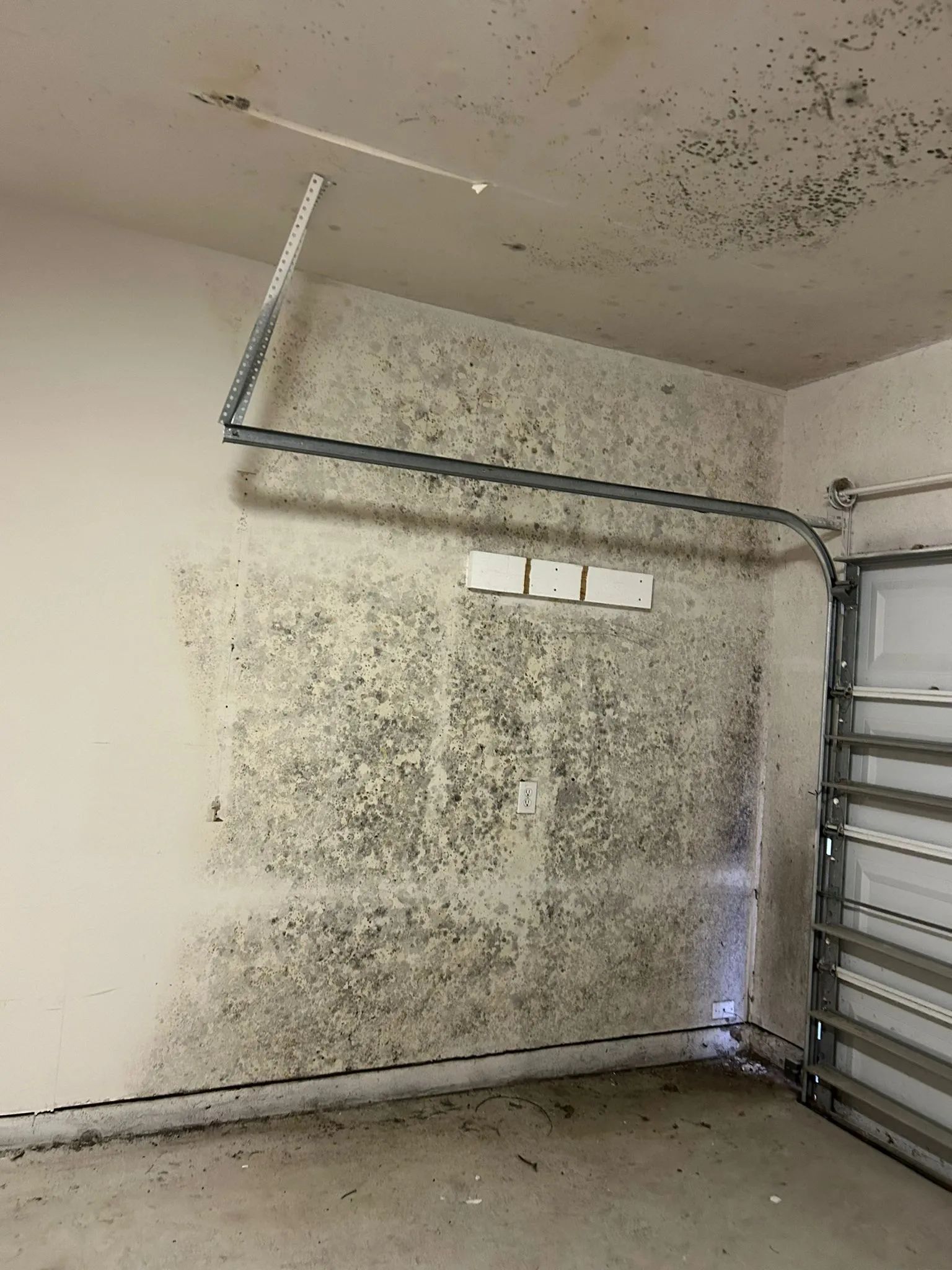
The short answer
If the mold covers less than about 10 square feet — roughly a 3-foot by 3-foot patch — sits on a hard surface you can scrub, the moisture source is fixed, and nobody in the house has asthma, allergies, or a weakened immune system, you can usually clean it yourself. That is the EPA's own line, in its words "in most cases."
Call a professional the moment any one of these is true: the patch is bigger than 10 square feet, there was a lot of water damage, the mold is hidden or you can smell it but cannot see it, it is in or near the HVAC system, it came from sewage or other contaminated water, it came back after you already cleaned it, or the wet material is drywall, insulation, or carpet pad that stayed wet. Size is the starting point, not the whole decision — the EPA says who should do the cleanup "depends on a number of factors," and size is only one of them (EPA, Mold Cleanup in Your Home).
Not sure which side of the line your patch falls on? Call (321) 985-3339 and tell us where the mold is and roughly how big the area is. We will tell you honestly whether it sounds like a DIY cleanup or one that needs a professional assessment.
Not sure which side of the line your patch falls on? Tell us where the mold is and roughly how big the area is — we will tell you honestly whether it sounds like a DIY cleanup or one that needs a professional assessment.
The 10-square-foot rule, explained properly
The rule gets repeated as a hard cutoff. It is not one. Here is what the EPA actually says in Mold Cleanup in Your Home: "If the moldy area is less than about 10 square feet (less than roughly a 3 ft. by 3 ft. patch), in most cases, you can handle the job yourself." The qualifiers do the work: "about," "less than roughly," "in most cases."
Above that size, or after a lot of water damage, the EPA points readers to its remediation guidance for larger buildings and advises hiring a contractor with experience cleaning up mold. The guidance is written for schools and commercial buildings, but the EPA says it applies to other building types too.
Three things people get wrong about the rule:
- It is about visible area, and visible area understates the job. Mold on the face of drywall usually means more behind it. A 2-foot patch on the surface can be a 10-foot problem inside the wall cavity, and you only find out once material comes out.
- It does not sort mold by type or color. The EPA's benchmark makes no distinction between mold species, and color alone does not show how hazardous a colony is. "Black mold" on a hard surface under 10 square feet falls inside the benchmark in theory — in practice it usually grows on chronically wet drywall, wood, or ceiling tile, which are porous materials you cannot scrub clean.
- A small patch can still be a professional job. Heavy growth in a small area, growth in a bad location, or a vulnerable person in the house can each outweigh the square footage. The EPA lists size as one consideration, alongside how much water damage there was and whether the water was contaminated.
Use the rule as a first filter. Then run the nine checks below. One yes, and the answer is a professional.
Nine checks: one yes means call a pro
| Check | Why it decides it |
|---|---|
| 1. Is the visible patch bigger than about 10 square feet? | Above the EPA line, cleanup needs containment and protective gear a homeowner does not have. |
| 2. Was there a lot of water damage? | Large water events soak framing, insulation, and subfloor. Surface cleaning cannot reach what got wet underneath. |
| 3. Can you smell mold but not see it? | A musty smell with nothing visible usually means hidden growth — inside walls, under flooring, or above a ceiling. Finding it means opening material. |
| 4. Is it in or near the HVAC system? | A contaminated system can spread spores through the whole house when it runs. The EPA says to consult its air-duct guidance before taking further action, and not to run the system until it has been assessed. |
| 5. Did it come from sewage, flooding, or other contaminated water? | The EPA is direct here: call a professional with experience cleaning buildings damaged by contaminated water. This is not a DIY category. |
| 6. Did it come back after you cleaned it? | Mold that returns means the moisture source is still active or the first cleanup left growth behind. Cleaning the same patch twice is the signal to stop and get an assessment. |
| 7. Is the wet material porous — drywall, insulation, carpet pad, ceiling tile? | Porous materials that stayed wet cannot be scrubbed back to clean. They have to come out, and cutting them out without containment spreads spores. |
| 8. Does anyone in the house have asthma, severe allergies, or a weakened immune system? | The EPA advises consulting a health professional before starting cleanup, and people with these conditions should stay out of the area during and after cleanup. Lower your threshold and call someone. |
| 9. Can you not find — or not fix — where the water came from? | Mold control is moisture control. If the leak is still active, any cleanup is temporary, DIY or professional. A pro assessment starts by mapping the moisture source. |
If every answer is no, DIY is a reasonable option. If even one is yes, get a professional assessment before you touch it.
When DIY makes sense
DIY is the right call only when all of these are true at the same time:
- The patch is under about 10 square feet, on a hard, non-porous surface — tile, glass, metal, sealed countertop, or a painted surface that is still sound.
- The moisture source is found and fixed. A cleaned patch over an active leak is a patch that comes back.
- The material underneath is dry. If drywall, wood, or insulation stayed wet, this is check 7 above, not a DIY job.
- Nobody in the household has asthma, severe allergies, or a weakened immune system, and children and pregnant people are not taking part in the cleanup.
- The mold is not in the HVAC system and did not come from sewage or floodwater.
- You can dry the area completely within 24 to 48 hours. The EPA's standing rule is to dry water-damaged areas and items within 24 to 48 hours to prevent mold growth (EPA, A Brief Guide to Mold, Moisture and Your Home).
A small patch of surface mold in a bathroom after a fixed leak, on tile, in a healthy household, is the classic DIY case. Almost everything else in a Treasure Valley home — a basement wall, a crawl space, a patch under a window that leaks every winter — fails at least one condition, usually the porous-material one.
How to do a DIY cleanup safely
If the checks above clear you for DIY, the EPA's cleanup tips are the method. Short version:
- Fix the water problem first. Clean the mold and fix the leak in the same job, or the mold returns. The EPA puts it bluntly: you must clean up the mold and fix the water problem.
- Wear the gear. A properly fitting N-95 respirator, long gloves that reach the middle of the forearm, and goggles without ventilation holes. This is the EPA's recommended protection for cleaning moldy areas.
- Do not spread it. Work gently, do not dry-scrub a dry patch into the air, and do not run the HVAC while you clean. Bag moldy material before carrying it through the house.
- Scrub hard surfaces with detergent and water, then dry completely. That is the EPA's baseline method. The CDC lists a bleach solution of no more than 1 cup of household bleach per 1 gallon of water as one option for hard surfaces — never mix bleach with ammonia or other cleaners, and never use bleach as a substitute for removing the mold. The EPA does not recommend biocides as a routine part of cleanup: dead mold can still cause allergic reactions, so killing it is not enough — it has to be removed.
- Throw out what cannot be cleaned. Absorbent materials that are moldy — ceiling tile, carpet pad, insulation, upholstered items — usually need to be replaced, not scrubbed.
- Dry the area within 24 to 48 hours. If it is still damp after two days, the conditions that grew the mold are still there.
- Do not paint or caulk over mold. The EPA warns against it: paint over mold is likely to peel, and the growth underneath keeps going.
If any step stops working — the patch is bigger once you start, the drywall behind it is wet, the smell does not go away — stop, and treat it as a professional job from that point. Half-cleaned mold that has been disturbed is worse than untouched mold.
What a professional actually does differently
Hiring a pro is not paying someone to scrub harder. It is paying for containment, equipment, and verification that a homeowner cannot replicate. Our how long mold remediation takes guide walks through the phases; the shape of a professional job is:
- Assessment first. The affected area and the moisture source are mapped, usually with moisture meters, before anything is removed. This is the step that answers the hidden-mold question.
- Containment. The work zone is sealed with plastic sheeting and held under negative air pressure, so spores do not spread to the rest of the house while material comes out.
- Removal, not just cleaning. Contaminated drywall, insulation, and carpet pad come out. Framing that stays gets cleaned and HEPA-vacuumed. Porous material is not scrubbed and kept.
- Drying with verification. Air movers and dehumidifiers run, typically 24 to 72 hours, and drying is confirmed with meter readings — not by touching the surface and calling it dry.
- Clearance. Air and surface samples are collected and sent to a lab, with results typically in 24 to 48 hours. Containment stays up until the report comes back. Rebuild starts only after clearance.
Most homes take 1 to 5 days of active remediation work, per our timeline guide — a small contained job in 1 to 2 days, a room or a few wall cavities in 3 to 5 days. That timeline is the other half of the DIY decision: a professional job is not just a bigger scrub, it is a contained, verified process with a defined finish.
What each route costs
DIY costs supplies: an N-95 respirator, gloves, goggles, detergent, bags, and, if anything porous has to go, replacement material. That is the whole bill when the job is genuinely small and on a hard surface.
A professional job is priced by scope, not by the hour. Our own mold remediation cost guide puts a typical mold remediation job at $1,200 to $3,750, using published national ranges. The number moves with the same factors in the nine checks above: area, water category, how much porous material comes out, and whether drying and clearance testing are included. A quote that looks cheap usually stops at dry framing and leaves rebuild, testing, or both to someone else — the same warning in our water damage restoration cost guide.
The expensive mistake runs both directions. Paying $1,200-plus to clean a 2-foot bathroom patch you could have scrubbed in an afternoon is wasted money. Spending a weekend DIY-cleaning a wall cavity that needed containment is worse: disturbed mold spreads, the moisture source stays, and the professional job that follows is bigger than the one you avoided. The nine checks exist to keep you off both sides of that mistake.
Mistakes that make mold worse
| Mistake | Why it backfires |
|---|---|
| Painting or caulking over mold | Seals growth in place. The EPA says the paint is likely to peel, and the mold underneath keeps growing. |
| Bleach on drywall or wood | Bleach does not reach growth inside porous material, and it is not a substitute for removing it. |
| Running the HVAC during cleanup | Moves spores from the work area through the whole house. |
| Cleaning without fixing the leak | The patch returns, usually larger, because the moisture never stopped. |
| Leaving wet porous material in place | Drywall, insulation, and carpet pad that stayed wet hold contamination below the surface. Drying the face does not dry the core. |
| Skipping protective gear | Disturbing mold releases spores into the air you are standing in. The respirator, gloves, and goggles are the cheapest part of the job. |
| Calling it done when it looks clean | Mold is finished when the area is dry, the moisture source is fixed, and — for a professional job — clearance testing confirms it. Looking clean is not a test. |
Conclusion
The decision is a checklist, not a guess. Under about 10 square feet, on a hard surface, with the moisture fixed and a healthy household, DIY is usually fine — that is the EPA's line. One yes on the nine checks — bigger area, hidden growth, HVAC, sewage, a return after cleaning, soaked porous material, or a vulnerable person in the house — and it is a professional job. The cost of getting it wrong is not the cleanup you paid for; it is the cleanup you have to pay for twice, after the first one spread the problem.
If you have run the checks and the answer is still unclear, call (321) 985-3339. Tell us where the mold is, how big it looks, and what got wet, and we will tell you honestly whether it sounds like a DIY cleanup or one that needs a professional assessment.
Common questions
Can I remove mold myself if it is less than 10 square feet?
In most cases, yes — if it is on a hard surface, the moisture source is fixed, and nobody in the house has asthma, severe allergies, or a weakened immune system. That is the EPA's guidance in Mold Cleanup in Your Home. Size is one factor, though: hidden growth, HVAC involvement, sewage, or soaked porous material can each make a small patch a professional job.
When should I hire a professional for mold removal?
When the patch is bigger than about 10 square feet, there was a lot of water damage, you can smell mold but cannot see it, it is in the HVAC system, it came from sewage or floodwater, it came back after cleaning, or the wet material is drywall, insulation, or carpet pad. Any one of those is enough on its own.
Is it safe to clean mold myself if someone in the house has asthma?
No — not as a DIY job. The EPA advises consulting a health professional before starting cleanup, and people with asthma, severe allergies, or a weakened immune system should stay out of the area during and after cleanup. Lower the threshold and call a professional.
Can I just use bleach to kill mold?
Bleach is not a cleanup by itself. The EPA's baseline is scrubbing hard surfaces with detergent and water and drying completely, and dead mold can still cause allergic reactions, so it has to be removed, not just killed. The CDC lists a bleach solution of no more than 1 cup per gallon as one option for hard surfaces — never mixed with ammonia — and bleach does not fix mold inside porous materials like drywall.
Why does mold keep coming back after I clean it?
Because the moisture source is still active, or the first cleanup left growth behind — usually inside a wall cavity or in porous material that was scrubbed instead of removed. Mold control is moisture control: until the leak is fixed and the area is dried within 24 to 48 hours, cleaning the surface is temporary.
How much does professional mold remediation cost?
Our mold remediation cost guide puts a typical job at $1,200 to $3,750, using published national ranges. The price moves with area, water category, how much porous material comes out, and whether drying and clearance testing are included.