Best Mold Remediation Services After a Plumbing Leak
The best mold remediation service after a plumbing leak finds all the wet material first — not just the visible stain — then stops the moisture at its source, removes what cannot be cleaned, and dries and verifies what stays.
- Mold can start growing within 24 to 48 hours
- The visible patch is almost never the whole job
- No published Boise price for leak jobs — national figures only
The short answer
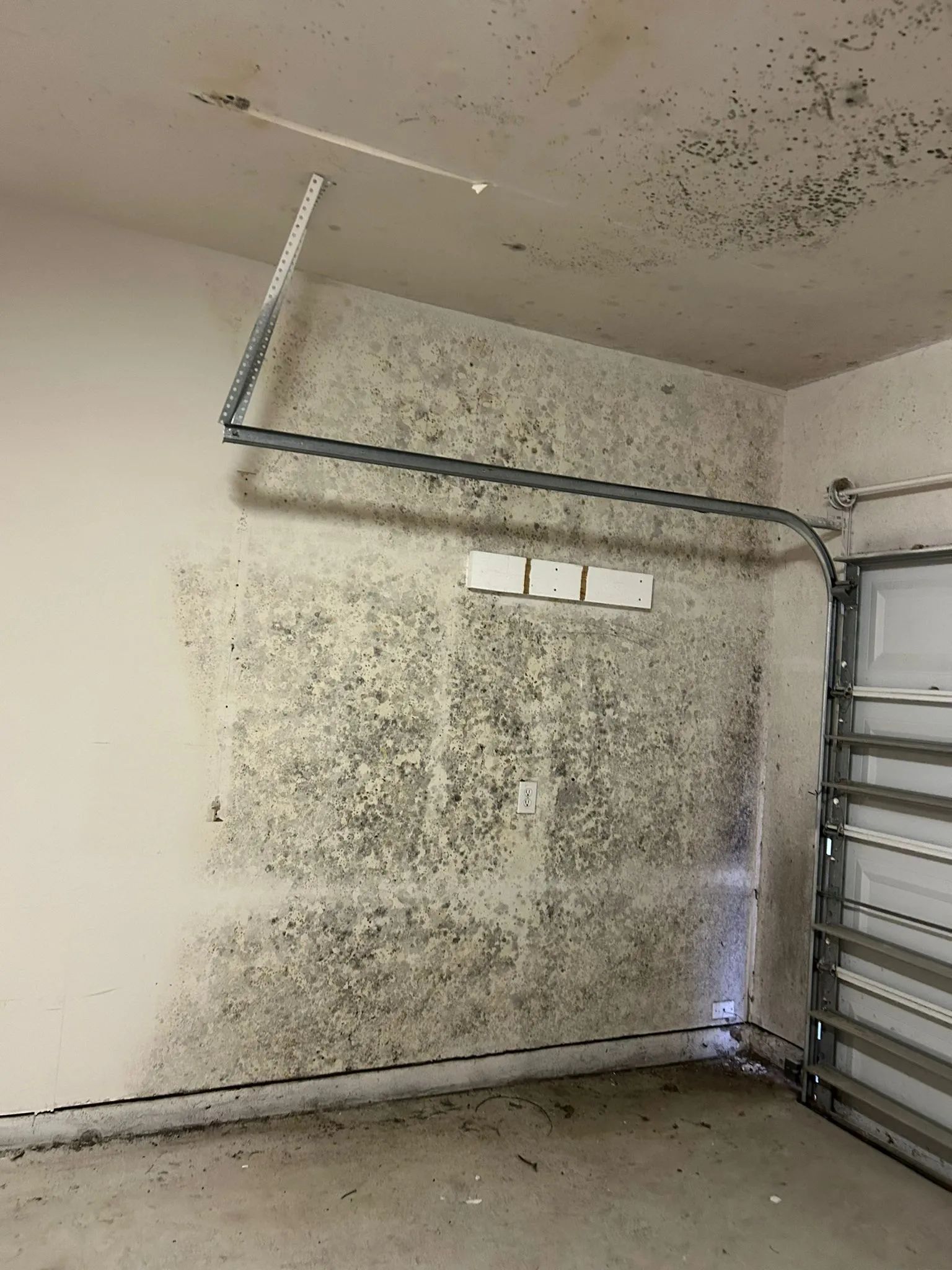
The best mold remediation service after a plumbing leak does four things in order: find all the wet material, not just the visible stain; stop the moisture at its source; remove what cannot be cleaned; and dry and verify what stays. A company that skips straight to scrubbing the stain, without checking inside the wall or under the floor, is not doing the job — it is hiding it.
Mold can start growing within 24 to 48 hours of water damage, so a leak that dripped quietly for a week has usually been growing longer than the homeowner knows. That is why the visible patch is almost never the whole job.
If the leak is still active, or the moldy area is bigger than a small patch, call (321) 985-3339 and describe where the leak was and how big the affected area looks. An honest answer starts with what needs to be looked at, not with a price.
Leak fixed but worried about what is growing behind the wall? Tell us where the leak was and how big the affected area looks, and we will tell you honestly what needs to be looked at first.
What a plumbing leak actually does to a house
A burst pipe is obvious. The leaks that cause the worst mold are usually the quiet ones: a supply line dripping inside a wall, a drain joint seeping under a bathroom floor, a refrigerator or washing-machine hose wetting the subfloor a little at a time. The water spreads through drywall, insulation, and wood framing long before a stain or a smell shows up on the surface.
That hidden spread is the whole problem. Mold grows on the damp material you cannot see, and by the time the surface shows a patch, the growth behind it is often several times bigger. Drying the surface does nothing to the wet insulation inside the wall cavity, and painting over the stain does nothing to the growth behind the paint.
Three things decide how bad a leak job gets:
- How long it ran. A leak found the same day is a drying job. A leak that ran for weeks is usually a removal job.
- What got wet. Drywall, insulation, carpet pad, and particle board hold water and usually have to come out once mold is growing in them. Framing and concrete can usually be cleaned and kept.
- Where the water went. Water runs down and sideways. A second-floor bathroom leak becomes a first-floor ceiling job; a kitchen leak becomes a basement job.
Do these three things first
Before any remediation starts, three steps protect both the house and any insurance claim.
1. Stop the water. Shut off the supply to the leaking fixture, or the main water supply if you cannot tell where it is coming from. A plumber fixes the leak itself; a remediation company handles the mold and the wet material. Those are two separate jobs, and a company that pretends they are one job is worth questioning.
2. Document everything. Photograph the leak, the wet areas, and any visible mold before anything is moved or torn out. Keep the plumber’s invoice. If you file an insurance claim later, the photos and the invoice are the record of what happened and when.
3. Do not just dry the surface. Fans and a dehumidifier help, but surface drying is not remediation. If the wall cavity or the subfloor is still wet, the mold keeps growing behind the dry surface. Moisture has to be measured inside the materials, not just felt on the outside.
What a good service should include
Use this as a checklist when you talk to any company. Every item below should be named in the written scope, or named as excluded. A quote that does not mention an item is not a cheaper quote — it is an incomplete one.
| Step | What it means | Why it matters after a leak |
|---|---|---|
| Moisture inspection | Meters and, where needed, opening small sections to find how far the water spread | The visible patch is rarely the full area |
| Containment | Sealing off the work area with plastic sheeting and negative air pressure | Keeps mold spores out of the rest of the house while material comes out |
| Removal | Taking out moldy drywall, insulation, carpet pad, and other porous material that cannot be cleaned | Porous material holds mold through its fibers; surface cleaning does not reach it |
| Cleaning | HEPA vacuuming and cleaning of framing and hard surfaces that stay | Removes spores from the surfaces that remain |
| Drying | Air movers and dehumidifiers until moisture readings are back to dry | Wet framing grows mold again if it is closed up damp |
| HEPA filtration | Air scrubbers running during and after the work | Captures airborne spores the work stirs up |
| Clearance check | A final look, and testing where it fits, confirming the area is clean and dry | The only way to know the job is actually finished |
If a company offers to spray the mold and leave the wet drywall in place, that is not remediation. If it offers to tear everything out without measuring moisture first, it is guessing at the scope, and the price will move once the walls are open.
How to tell a good company from a bad one
Four questions separate a straight answer from a sales pitch.
1. What is included, in writing? Containment, removal, HEPA filtration, drying, and the clearance check should each be named. Leak repair and rebuild are usually separate lines — that is normal, as long as it is stated.
2. How do you find the full extent? The answer should involve moisture readings and opening up wet material, not just looking at the stain. “We will see once we start” without a plan for measuring is a warning sign.
3. What could change the price? A good company says plainly that the number can move if the affected area turns out bigger once drywall comes out — and says it will tell you before the number moves, not after.
4. What stays, and what goes? The company should be able to explain, in plain terms, which materials come out and which get cleaned and kept — and why.
Red flags: a price given sight unseen over the phone, a quote that is far below every other one with no explanation of what it leaves out, pressure to sign on the spot, and any promise about how fast the job will finish before anyone has measured the moisture.
When this is not a DIY job
The EPA’s own line is the one to use: if the moldy area is less than about 10 square feet (less than roughly a 3 ft. by 3 ft. patch), in most cases, you can handle the job yourself — and size is only one factor among several (EPA, Mold Cleanup in Your Home). Call a professional when the patch is bigger than that, when the mold is on insulation, drywall, or framing rather than a hard surface you can scrub, when you can smell it but cannot see where it is, or when it came from a leak, a flood, or sewage.
A plumbing leak fails the DIY test on two counts at once: the water came from inside the structure, so the growth is usually hidden, and the moisture source sat inside a wall or floor where a homeowner cannot measure it. Scrubbing the visible patch while the cavity behind it stays wet is the most common way a small leak job becomes a repeat job.
What it typically costs
There is no published price list for leak-related mold jobs in Boise, and any company quoting one is inventing it. The national published figures are the honest reference point: most professional mold remediation jobs in the United States cost between $1,200 and $3,750, with a national average around $2,300, usually priced at $10 to $25 per square foot of affected area (HomeAdvisor, June 2026; This Old House, March 2026). Small patches run $500 to $1,500; large or whole-house jobs run $10,000 to $30,000.
A leak job lands where it lands based on the same drivers as any other job: how much area is affected, where it is, and how much material has to come out. Inspection, testing, the plumbing repair itself, and rebuilding are usually separate from the remediation quote — ask about each one before you agree to anything, and compare quotes on the same written scope. Two quotes for different scopes cannot be compared on price alone.
Does insurance help?
Sometimes — it depends on what caused the water, not on the mold itself. Sudden, accidental water damage (a burst pipe, for example) is often covered; a slow leak that ran for weeks, neglect, and flood water usually are not, and many policies cap mold coverage. The full Idaho picture — covered causes, sublimits, the claim steps, and what to do if a claim is denied — is in the companion guide: Does Homeowners Insurance Cover Mold in Idaho?. Read that before you call your insurer, so you know which questions to ask, and keep the photos and the plumber’s invoice from the first section — they are the evidence the claim runs on.
Conclusion
After a plumbing leak, the best mold remediation service is the one that finds the full extent of the wet material first and prices the real job, not the visible stain. Mold can start within 24 to 48 hours, and a slow leak usually means hidden growth inside walls or under floors — so moisture inspection, containment, removal of what cannot be cleaned, drying, HEPA filtration, and a clearance check all belong in the written scope. Get the leak fixed, document everything, and compare companies on the same scope, not on the lowest number. If the leak is still active or the area is bigger than a small patch, call (321) 985-3339 and describe where the leak was — an honest answer starts with what needs to be looked at.
Common questions
How fast does mold grow after a plumbing leak?
Mold can start growing within 24 to 48 hours of water damage. A leak that dripped unnoticed for a week has usually been growing longer than the homeowner knows, which is why the visible patch is rarely the whole job.
What should mold remediation after a plumbing leak include?
Moisture inspection to find the full extent, containment, removal of moldy porous material, HEPA cleaning of what stays, drying until moisture readings are back to normal, HEPA filtration during the work, and a final clearance check. Leak repair and rebuild are usually separate.
Can I clean up mold from a plumbing leak myself?
If the area is less than about 10 square feet, on a hard surface, and you can find and fix the moisture source, the EPA says you can usually handle it yourself. A leak inside a wall or floor usually fails that test, because the growth is hidden and the moisture cannot be measured from the surface.
Does the plumber fix the mold too?
No — those are two separate jobs. The plumber fixes the leak; the remediation company handles the wet material and the mold. A company should say plainly which of the two it is quoting for.
How much does mold remediation after a plumbing leak cost?
There is no published Boise price for leak jobs specifically. National published figures put most professional jobs between $1,200 and $3,750, averaging around $2,300, at roughly $10 to $25 per square foot (HomeAdvisor, June 2026). The final number depends on the affected area, location, and how much material has to come out.
Will insurance cover mold from a plumbing leak?
It depends on the cause. Sudden, accidental water damage is often covered; a slow leak that ran for weeks usually is not, and many policies cap mold coverage. See the full Idaho insurance guide linked above, and keep your photos and the plumber’s invoice.